
River Cruise Sale Rivers
Uncover Hidden Gems and Iconic Harbors: Diverse Destinations Await

Amazon River
The Amazon River is the world's greatest river by volume, carrying more water to the sea than any other — roughly 20% of all freshwater discharged into the world's oceans. Rising in the Peruvian Andes and flowing some 4,000 miles eastward across the South American continent, it empties into the Atlantic Ocean along Brazil's northern coast. The Amazon basin it drains is staggering in scale: nearly 2.7 million square miles of tropical rainforest, home to an estimated 10% of all species on Earth. During the wet season, the river swells so dramatically that its floodplain expands from a few miles wide to over 30, submerging entire forests and creating a phenomenon known as the "flooded forest," where river dolphins and fish swim among the treetops. For thousands of years it has been the lifeblood of indigenous Amazonian peoples, and today it remains both one of the planet's most vital ecosystems.
Pricing From:
$9,600

Danube River
The Danube is Europe's second-longest river and arguably its most storied, rising in the Black Forest of southwestern Germany and flowing some 1,777 miles eastward through ten countries — more than any other river on Earth — before emptying into the Black Sea through a vast and wildlife-rich delta on the Romanian and Ukrainian coast, and along that remarkable journey it passes through or alongside some of the continent's greatest cities: Vienna, Bratislava, Budapest, and Belgrade all owe their existence, their prosperity, and much of their character to the river on whose banks they grew. For the Romans it was the northern frontier of their empire, the great liquid wall beyond which the barbarian world began, and the string of fortresses they built along its banks left a legacy of towns and cities that still thrive today. The river's most dramatic scenery comes in the Iron Gates gorge on the border of Serbia and Romania, where the Danube narrows dramatically between towering limestone cliffs before widening again into the flat plains of the lower basin, but it is the middle Danube — the stretch between Passau and Budapest known as the Wachau Valley — that most captures the imagination, a UNESCO World Heritage landscape of vineyard-covered terraces, medieval monasteries perched on hilltops, and baroque market towns that seem to have been arranged by a painter rather than by history. The Danube has given its name to one of the most beloved pieces of music ever written, inspired poets and philosophers across millennia, and remains today the backbone of European river cruising — a river so embedded in the identity of a continent that to travel it is to read Europe's biography in water.
Pricing From:
$1,629

Douro River
The Douro is one of the great wine rivers of the world, rising in the high tablelands of Castile in north-central Spain — where it is known as the Duero — and flowing some 550 miles westward through the Iberian Peninsula before cutting dramatically through the granite hills of northern Portugal and delivering its clear, cold waters to the Atlantic Ocean at Porto, one of Europe's most beautiful and characterful cities, and along that journey it passes through a landscape so singular and so breathtaking that UNESCO saw fit to protect its most celebrated stretch as a World Heritage Site. The Spanish upper reaches flow through the wide, arid plateau of Castile and León, past the ancient university city of Salamanca and the medieval walled town of Zamora, through a landscape of wheat fields, stork nests, and Romanesque churches that speaks of a quieter, older Spain largely undiscovered by international tourism. But it is in Portugal that the Douro truly reveals its magnificence — from the Spanish border eastward to Porto, the river has carved a series of steep-sided valleys of extraordinary drama, where every south-facing slope has been laboriously terraced by hand over centuries and planted with the indigenous grape varieties that produce Port wine and the increasingly celebrated Douro table wines that have made this one of the most exciting wine regions on earth. The terraced vineyards cascade down to the water's edge in great sweeping amphitheaters of green and gold, punctuated by the grand quintas — wine estates — whose white manor houses and lodges perch above the river with an air of timeless, sun-drenched prosperity. The towns of Peso da Régua and Pinhão sit at the heart of this wine country, their azulejo-tiled railway stations decorated with blue-and-white ceramic panels depicting scenes of the harvest, and the vintage season in October transforms the valley into a riot of color, activity, and celebration as grapes are brought down from the terraces and the ancient tradition of foot-treading in stone lagares continues alongside modern winemaking technology. River cruising on the Douro has blossomed into one of Europe's finest travel experiences, with boutique vessels navigating a series of locks that step the river up through the valley, offering passengers ever-more-spectacular vistas as the journey unfolds — a slow, sun-warmed, wine-scented passage through one of the continent's most rewarding and least-hurried landscapes.
Pricing From:
$2,829

Elbe River
The Elbe is one of central Europe's most elegant and historically resonant rivers, rising in the Krkonoše — the Giant Mountains — on the border of the Czech Republic and Poland at an altitude of nearly 4,700 feet and flowing some 724 miles northwestward through Bohemia, Saxony, and the North German Plain before emptying into the North Sea at Cuxhaven, and along that graceful arc it passes through a remarkable sequence of landscapes and cities that together read like a condensed history of German and Central European civilization. Its most dramatically beautiful stretch comes early, in the Elbe Sandstone Mountains of Saxony just south of Dresden, where the river winds through a landscape of soaring sandstone pillars, forested plateaus, and fairy-tale rock formations so otherworldly that the German Romantic painters — Caspar David Friedrich above all — returned to it again and again, finding in its misty spires and river reflections the perfect expression of the sublime, and the region is now celebrated as Saxon Switzerland, one of Germany's most beloved national parks and hiking destinations. Dresden itself sits on the Elbe like a gift, its baroque skyline of domes, spires, and the celebrated Frauenkirche cathedral reflected in the broad, calm river below in a panorama that has been called one of the most beautiful cityscapes in Europe, and the city's world-class art collections — the Zwinger, the Green Vault, the Old Masters Picture Gallery — speak to the extraordinary cultural ambition of the Saxon princes who built their capital beside the water. Downstream, the Elbe passes through the wine-growing villages of the Elbe Valley, a string of castle-topped hills and terraced vineyards producing some of Germany's most northerly and distinctive wines, before reaching Magdeburg and then Hamburg, where the river broadens into a magnificent tidal estuary and the vast, working harbor — one of Europe's busiest ports — reminds the traveler that for all its scenic and cultural richness, the Elbe has always been above all else a working river, a highway of commerce that connected the heart of the continent to the wider world.
Pricing From:
$3,599

Garonne River
The Garonne is the great river of southwestern France, rising with surprising vigor from a glacier in the Spanish Pyrenees in the Val d'Aran — making it the only major French river with its source in Spain — and flowing some 357 miles northwestward through the sun-drenched landscapes of Gascony and Aquitaine before reaching Bordeaux and joining the Dordogne to form the broad, tidal Gironde estuary that sweeps majestically to the Atlantic, and from its Pyrenean birthplace to its oceanic conclusion it passes through a succession of landscapes and cultures so richly varied and so deeply pleasurable that the entire valley reads like an extended love letter to the good life in all its French manifestations. The upper Garonne tumbles energetically through the steep mountain valleys of the Haute-Garonne, past the elegant city of Toulouse — the rose-pink capital of the Midi whose warm terracotta buildings glow in the southern light like embers — where the river broadens and slows into the wide, handsome waterway that flows through the city's historic center, its banks lined with plane trees, outdoor cafés, and the animated student life of one of France's most youthful and vibrant cities. Below Toulouse the river winds through the rolling hills of Gascony, the ancient land of d'Artagnan and Armagnac brandy, where sunflower fields, medieval bastide towns, and duck farms occupy a landscape of golden, unhurried beauty that feels reassuringly distant from the modern world. The Garonne's greatest claim to world renown, however, lies in the extraordinary wine country it nourishes in its lower reaches — the vineyards of Bordeaux, Sauternes, and Entre-Deux-Mers spread across both banks in a mosaic of carefully tended vines that produce some of the most celebrated and sought-after wines on Earth, the river's influence on soil, drainage, and microclimate being as fundamental to the character of a great Bordeaux as the grapes themselves. At Bordeaux the river reaches its magnificent conclusion, flowing past the sweeping stone façades of the city's celebrated waterfront — the longest classical urban frontage in Europe — in a wide, luminous arc that earned the city the nickname the Port of the Moon, the whole scene best appreciated from the eastern bank at dusk when the golden stone catches the last light and the river turns the color of the wine that made this corner of France immortal.
Pricing From:
$2,279

Magdalena River
The Magdalena is Colombia's great national river and the beating heart of the country's geography, culture, and imagination, rising high in the Colombian Massif near the Páramo de las Papas in the southern Andes at an altitude of some 10,000 feet and flowing some 950 miles northward through the broad inter-Andean valley between the Central and Eastern Cordilleras before fanning into a swampy delta and emptying into the Caribbean Sea near the city of Barranquilla, and from its cold Andean headwaters to its tropical Caribbean conclusion it passes through a landscape of such staggering biodiversity, such vivid human culture, and such deep historical significance that Gabriel García Márquez — who grew up on its banks and set much of his fictional universe in the towns and villages along its length — drew on it repeatedly as the central metaphor for Colombia itself, a river of magical, teeming, unstoppable life flowing through a land of equal parts beauty and intensity. The upper Magdalena cuts through the dramatic Andean landscape of Huila and Tolima departments, passing near the ancient pre-Columbian ceremonial site of San Agustín — a UNESCO World Heritage Site where hundreds of monumental stone figures carved by a mysterious vanished civilization stand guard over burial mounds in a landscape of cloud-forested hills and river valleys of haunting beauty — before descending into the warmer middle valley where the river broadens and the landscape opens into a lush tropical panorama of banana plantations, cacao groves, and cattle ranches stretching between the great mountain walls on either side. The middle Magdalena was the great highway of Colombian history for four centuries — the route by which Spanish conquistadors pushed into the interior, by which gold and emeralds were carried to the coast, and by which the ideas, goods, and people that built modern Colombia moved up and down the country in the famous champán boats and later the wood-burning steamships whose whistles and smoke García Márquez immortalized in Love in the Time of Cholera, a novel so saturated in the river's atmosphere of heat, romance, and tropical languor that reading it feels like traveling the Magdalena itself. The lower river passes through the Caribbean lowlands of Bolívar department and the celebrated Mompos Depression, a vast seasonally flooded wetland of extraordinary ecological richness where the river splits into multiple channels and creates a labyrinthine waterscape of lakes, ciénagas, and flooded forests that support one of the most remarkable concentrations of waterbirds, fish, manatees, and caimans in South America, and where the colonial city of Mompox — another UNESCO World Heritage Site — sits on a river island in a state of such perfectly preserved Spanish colonial beauty, such deep quiet, and such magnificent isolation that García Márquez called it the most beautiful town in the world, a place where time moves at the pace of the river itself, unhurried, warm, and endlessly generous.
Pricing From:
$2,999

Main River
The Main is one of Germany's most beloved and characterful rivers, rising in two separate headstreams — the Red Main and the White Main — in the hills of the Franconian highlands of northern Bavaria and flowing some 527 miles westward in a series of wide, looping meanders through some of the most scenically and culturally rewarding landscape in the entire country before joining the Rhine at the dynamic, cosmopolitan city of Frankfurt, and along that pleasurable westward journey it passes through a succession of landscapes, cities, and wine regions that together constitute one of Germany's richest and most rewarding travel corridors, a river valley that manages to be simultaneously historic and lively, intimate and grand, deeply traditional and thoroughly contemporary. The upper Main flows through the gentle, forested hills of Franconia — a region with a distinct cultural identity, dialect, and cuisine that sets it apart from the rest of Bavaria — passing through the magnificent baroque city of Bamberg, whose extraordinarily well-preserved medieval and baroque townscape rising above the river on a series of hills earned it UNESCO World Heritage status and the affectionate nickname of the Franconian Rome, its cathedral, its old town hall perched improbably on an island in the river, and its famous smoked beer breweries combining to create one of the most satisfying and complete historic city experiences in Germany. Würzburg, the Main's other great Franconian city, sits in a broad valley surrounded by the vineyards of the Franconian wine region — one of Germany's most distinctive and underappreciated wine cultures, producing dry, mineral Silvaner and Riesling in the iconic flask-shaped Bocksbeutel bottle that has been associated with this river valley for centuries — and is dominated by the Marienberg Fortress on its hill above the river and the magnificent Residenz palace below, whose grand staircase ceiling fresco by Giovanni Battista Tiepolo is considered one of the greatest baroque paintings in existence. Below Würzburg the Main winds through the Spessart forest and the wine villages of the Main loop, a series of tight river bends that carry the water through a landscape of vine-covered hillsides, half-timbered market towns, and medieval castles whose reflections shimmer in the broad, calm surface of the river below, before reaching the Rhine-Main metropolitan region and the gleaming skyline of Frankfurt — a city whose soaring financial district towers rise above the river in dramatic contrast to the carefully restored medieval Römerberg quarter on the opposite bank, the old and the new facing each other across the Main in a juxtaposition that somehow perfectly captures the character of a river that has always managed to hold tradition and modernity in comfortable, productive, and thoroughly enjoyable tension.
Pricing From:
$3,229
Mekong River
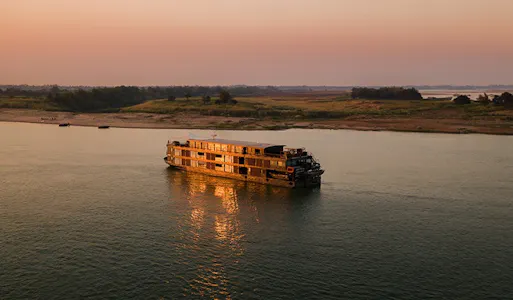
The Mekong is the great river of Southeast Asia, the tenth longest on Earth and the seventh largest by water volume, rising on the high Tibetan Plateau at an altitude of over 16,000 feet among the glaciers and snowfields of the Lasagongma Spring in Qinghai Province and flowing some 2,700 miles southeastward through a succession of landscapes, climates, and cultures of staggering diversity — through the deep gorges of Yunnan where it runs parallel to the Salween and Yangtze in one of the most dramatic river landscapes on the planet, through the Golden Triangle where the borders of Myanmar, Laos, and Thailand meet at the water's edge, through the broad and languid lowlands of Laos and Cambodia, and finally through the immense and endlessly intricate delta of southern Vietnam where it fans into nine separate channels — the Nine Dragons of Vietnamese legend — and delivers its waters to the South China Sea. The river is the lifeblood of an estimated 70 million people across six countries who depend on it directly for food, water, transportation, and spiritual sustenance, and the annual flood pulse that swells the Mekong each monsoon season is one of the great ecological events on Earth — nowhere more dramatically expressed than at the Tonle Sap Lake in Cambodia, where the floodwaters actually reverse the flow of the tributary connecting lake to river, causing the lake to expand from 1,000 square miles to over 6,000 in a matter of weeks, creating the most productive freshwater fishery in the world and feeding the Khmer civilization that built Angkor Wat on its shores. The river passes through some of the most magnificent scenery in Asia — the limestone karst landscapes of northern Laos where the slow boat from Huay Xai to Luang Prabang drifts between jungle-covered mountains in a two-day passage of meditative beauty that travelers consistently describe as one of the great journeys of their lives, the four thousand islands of the Si Phan Don region in southern Laos where the river spreads to its greatest width of nearly nine miles and the rare Irrawaddy dolphin still surfaces in the quieter channels, and the palm-fringed delta waterways of Vietnam where conical-hatted farmers tend their rice paddies and wooden sampans loaded with tropical fruit navigate the brown, teeming channels in the golden light of early morning. The Mekong is also one of the world's great biodiversity hotspots, its basin home to an extraordinary array of species including the giant Mekong catfish — one of the largest freshwater fish on Earth — the Irrawaddy dolphin, the Siamese crocodile, and hundreds of fish species that migrate up and down the river in rhythms as old as the river itself, while its banks support a mosaic of ethnic minority cultures — the Akha, Hmong, Dai, Lue, and dozens of others — whose traditions, textiles, and river-centered ways of life represent some of the most vivid and irreplaceable human cultural diversity remaining anywhere on the planet.
Pricing From:
$1,929

Mississippi River
The Mississippi is America's great river, the colossus of the continent's interior, rising modestly and almost apologetically from the clear, cold waters of Lake Itasca in the pine forests of northern Minnesota — where the entire river can be stepped across on a line of stones — and then gathering itself over the course of 2,340 miles into one of the mightiest waterways on Earth, draining an enormous basin that encompasses all or part of thirty-one states and two Canadian provinces, nearly forty percent of the contiguous United States, before delivering its vast burden of water and sediment to the Gulf of Mexico through the bird's-foot delta of southern Louisiana in a final flourish of muddy, teeming, irresistible force. The river is the geographic spine of the American nation, the great north-south axis around which the interior of the continent organizes itself, and its significance to American history, culture, economy, and imagination is so profound and so pervasive that it is almost impossible to overstate — de Soto and Marquette and La Salle explored its length, the Civil War was decided in part by control of its strategic corridor, the steamboat era transformed it into the commercial artery of a young and expanding nation, and Mark Twain immortalized its moods, its characters, and its particular quality of muddy, sun-drenched, morally complicated American life in prose so vivid and so true that Huckleberry Finn and Life on the Mississippi remain the river's definitive portraits a century and a half after they were written. The upper Mississippi, from its Minnesota headwaters to St. Louis, flows through a landscape of exceptional natural beauty — the river carving a wide, bluff-lined valley through the driftless region of Wisconsin, Iowa, and Illinois where dramatic limestone palisades rise above islands, backwaters, and marshes of extraordinary ecological richness, the whole great valley system designated as the Upper Mississippi River National Wildlife and Fish Refuge and serving as one of the most important migratory bird corridors in North America, a flyway of continental significance along which hundreds of millions of birds travel each spring and autumn in one of the great wildlife spectacles of the natural world. Below the confluence with the Missouri at St. Louis — where the two great rivers meet in a collision of clear and muddy water whose visible boundary stretches for miles downstream — the Mississippi becomes the lower river, broader, slower, more powerful, and more southern in character, rolling past the bluffs of Missouri and Kentucky, receiving the Ohio at Cairo in Illinois in the largest tributary confluence on the continent, and then entering the flat, fertile, impossibly rich alluvial landscape of the Mississippi Delta — not the bird's-foot delta of Louisiana but the agricultural delta of Mississippi and Arkansas, a vast floodplain of cotton fields, catfish ponds, cypress swamps, and small towns whose culture, music, and food represent one of the most original and influential American civilizations ever produced, the birthplace of the blues, of gospel, of the rhythmic and emotional foundations upon which virtually all American popular music has been built. New Orleans guards the river's mouth with the flamboyant, multicultural, architecturally magnificent confidence of a city that has always known it sits at the confluence of the world's great currents — French and Spanish and African and American, jazz and Creole cooking and Mardi Gras and the Mississippi itself — and the French Quarter's iron-lace balconies overlooking the great brown river as it makes its final bend to the sea provide one of the most evocative and quintessentially American urban vistas anywhere in the nation, a fitting conclusion to the journey of a river that contains within its currents the full, unruly, magnificent complexity of the country it drains.
Pricing From:
$3,599

Moselle River
The Moselle is one of Europe's most intimate and rewarding rivers, rising in the Vosges Mountains of northeastern France near the Col de Bussang at an altitude of some 2,300 feet and flowing some 339 miles northeastward through France, briefly forming the border between Luxembourg and Germany, before joining the Rhine at the ancient and magnificent city of Koblenz in one of the most celebrated river confluences in Europe — and along that relatively compact but endlessly varied journey it passes through a succession of landscapes so consistently beautiful, so richly historic, and so deeply pleasurable in their human scale and their devotion to the good life that the Moselle valley has been treasured by travelers since the Romans first planted vines on its steep slate slopes two thousand years ago and declared it one of the finest places in their empire to live. The French upper Moselle flows through the gentle, rolling landscape of Lorraine — a region whose cooking, particularly its celebrated quiche and mirabelle plum orchards, reflects the Franco-German cultural blending that has always characterized this borderland — before passing through the steel and university city of Metz, whose magnificent Gothic cathedral, the Cathedral of Saint-Étienne, contains more medieval stained glass than any other church in the world, filling the enormous interior with a constantly shifting tapestry of colored light that ranks among the great artistic experiences of France. The river then enters Luxembourg, briefly touching the Grand Duchy's southern wine region before crossing into Germany at the town of Perl and beginning what most travelers consider the most beautiful stretch of the entire valley — the German Moselle between Trier and Koblenz, some 125 miles of river so consistently and so extravagantly beautiful that it requires a conscious effort not to exhaust one's vocabulary of appreciation within the first hour of travel. Trier itself — Augusta Treverorum to the Romans, who made it one of the most important cities in the western empire — anchors the German Moselle with a weight of antiquity unmatched by almost any city north of the Alps, its Porta Nigra gate, its imperial baths, its basilica, and its amphitheater constituting the finest collection of Roman architecture in Germany and lending the city an atmosphere of deep, settled, patrician confidence entirely in keeping with its position at the head of one of Europe's greatest wine rivers. Below Trier the Moselle enters its most celebrated phase, winding through the slate Eifel and Hunsrück hills in a series of extravagant loops and meanders — the river bending back on itself so dramatically at places like the Moselle Loop near Bremm that the same hillside appears on both sides simultaneously — its steep slate slopes planted with Riesling vines that cling to gradients so severe that all work must be done by hand, producing wines of extraordinary mineral precision and delicate, aromatic beauty that are among the most distinctive and food-friendly in the world, their pale gold color and dancing acidity a direct expression of the grey slate and cool river air from which they come. The valley's villages — Bernkastel-Kues with its medieval market square and half-timbered apothecary, Traben-Trarbach with its art nouveau villas, Cochem with its fairy-tale castle perched above the river on a wooded crag, and dozens of smaller communities whose names appear on wine labels around the world — are strung along both banks in a procession of such consistent charm, such well-tended beauty, and such wholehearted dedication to the pleasures of Riesling, Sekt, and riverside hospitality that traveling the Moselle by boat, by bicycle along its famous cycle path, or simply by car stopping at every village that catches the eye, feels less like tourism and more like a prolonged, deeply satisfying lesson in how a river valley and its people can spend two thousand years perfecting the art of living well.
Pricing From:
$3,179

Nile River
The Nile is the longest river on Earth, stretching some 4,130 miles from its most remote headwaters in the highlands of Burundi southward through the heart of Africa and northward through Sudan and Egypt before fanning into its famous delta and emptying into the Mediterranean Sea, and it is impossible to overstate the degree to which this single ribbon of water made possible one of the most extraordinary civilizations in human history — for without the Nile's annual flood, which deposited a fresh layer of rich black silt across the desert floor each year with the reliability of a calendar, the pharaohs, the pyramids, the temples, and the entire magnificent edifice of ancient Egyptian culture simply could not have existed. The river has two principal sources — the White Nile, which flows north from Lake Victoria through Uganda and Sudan carrying the steady base flow that keeps the river alive year-round, and the Blue Nile, which rises in the Ethiopian highlands at Lake Tana and contributes the great seasonal surge of nutrient-rich water that made Egyptian agriculture so miraculously productive — and the two streams meet at Khartoum in Sudan in one of the world's most symbolic confluences, their differently colored waters visibly distinct for miles downstream. In Egypt the Nile creates a corridor of impossible green cutting through the tawny desert on either side, a landscape so stark in its contrast — lush palms and sugarcane fields on the riverbank, dead sand and rock beginning precisely where the water's reach ends — that it feels less like nature and more like a demonstration of the river's absolute power over life and death in an arid land. The great monuments of ancient Egypt are strung along its banks like beads on a necklace: the pyramids of Giza, the temples of Luxor and Karnak, the colonnaded grandeur of Edfu and Kom Ombo, and the magnificent rock-cut temples of Abu Simbel all face the river that made them possible and that has carried travelers southward on feluccas and cruise ships for thousands of years, the timeless current connecting the modern world to the most ancient chapters of human achievement.
Pricing From:
$4,949

Po River
The Po is Italy's longest and most powerful river, rising from a small spring at the foot of Monviso — a pyramid-shaped peak in the Cottian Alps of Piedmont whose snow-capped summit is visible from much of the Po Plain on clear days — and flowing some 405 miles eastward across the broad, flat, extraordinarily fertile agricultural heartland of northern Italy before fanning into a vast delta of marshes, lagoons, and shifting sand bars that empties into the Adriatic Sea south of Venice, and along that east-ward journey it drains the entire southern face of the Alps and the northern face of the Apennines, receiving the waters of dozens of major tributaries — the Ticino, the Adda, the Oglio, the Mincio among them — and gathering into a single river the snowmelt and rainfall of the most economically productive and culturally rich region in the Italian peninsula. The Po Plain — the Pianura Padana — that the river created and continues to nourish is the agricultural engine of Italy, a vast, flat, misty landscape of rice paddies, cornfields, dairy farms, and Parmesan cheese production whose fertility has supported dense human settlement since the Bronze Age and whose produce — Parmigiano-Reggiano, Prosciutto di Parma, Grana Padano, Aceto Balsamico di Modena, Arborio rice, and the wines of Piedmont and Lombardy — constitute some of the most celebrated and beloved foods and drinks in the entire world, a gastronomic legacy so rich and so deeply rooted in the river's alluvial soils that the Po might reasonably be described as the most delicious river in Europe. The cities that line its banks and those of its tributaries read like a roll call of Italian civilization at its most magnificent — Turin, the elegant Savoy capital whose baroque piazzas and arcaded streets reflect the confident ambition of the dynasty that unified Italy, sits at the river's western end; Piacenza, Cremona — birthplace of the Stradivarius violin and home to a tradition of string instrument making so refined and so mysterious that modern craftsmen still cannot fully replicate it — Mantua, whose Renaissance ducal palace and the Gonzaga court that filled it with art and music and learning represent one of the highest achievements of Italian cultural life, and Ferrara, the Este capital whose brick-built Renaissance city center is so perfectly preserved that walking its streets feels less like tourism and more like time travel, all sit along the Po or its tributaries in a cultural constellation of extraordinary density and brilliance. The river's delta, spreading across the flatlands of the Veneto and Emilia-Romagna in a wide fan of channels, wetlands, and coastal lagoons, is one of Italy's most important and most beautiful natural landscapes — the Po Delta Regional Park protects a mosaic of habitats that supports an astonishing variety of birdlife including flamingos, herons, egrets, and migrating species from across Europe and Africa, and the flat, luminous, water-reflected landscape of the delta, with its fishing villages, its valley culture of eel farming and duck hunting, and its vast, melancholy skies, possesses a quality of austere, horizontal beauty entirely unlike anything else in Italy and deeply reminiscent of the Dutch landscapes that inspired Vermeer and Rembrandt — a reminder that at the edge of the river, where land and water negotiate their boundary in the slow, patient way of deltas, Italy reveals a face quite different from the one the world usually sees, quieter and stranger and in its own way just as beautiful.
Pricing From:
$2,159

Rhine River
The Rhine is the great river of northwestern Europe, rising from two sources high in the Swiss Alps — the Anterior Rhine and the Posterior Rhine joining at Reichenau in the canton of Graubünden — and flowing some 765 miles northward and northwestward through Switzerland, Liechtenstein, Austria, France, Germany, and the Netherlands before emptying into the North Sea through a broad delta shared with the Meuse and the Scheldt, and in that relatively compact journey through the heart of the most economically productive and historically eventful region on Earth it has accumulated a weight of myth, history, culture, and natural grandeur that makes it arguably the most storied river in the Western world — the liquid spine of European civilization from the Roman legions who used it as their northern frontier to the medieval merchants who built their fortunes on its tolls to the Romantic poets and painters who found in its mist-shrouded castles and vine-clad gorges the perfect embodiment of sublime northern beauty. The river's Swiss upper reaches flow through a landscape of alpine clarity and precision — the young Rhine gathering strength through the canton of Graubünden before broadening into Lake Constance, the Bodensee, whose blue expanse it crosses before resuming its northward journey and plunging dramatically over the Rhine Falls at Schaffhausen, the largest waterfall in Europe by volume, whose thundering curtain of white water and perpetual mist rainbow has been drawing visitors since the eighteenth century and retains a raw, elemental power that no amount of tourism infrastructure can diminish. Below Basel the river turns northward into its great Germanic phase, flowing through the Upper Rhine Plain between the Black Forest and the Vosges Mountains in a broad, regulated channel whose surrounding landscape of orchards, vineyards, and medieval market towns — Freiburg, Colmar, Breisach, and Strasbourg among them — represents the Franco-German cultural borderland at its most civilized and most rewarding, a region where German precision and French sensibility have spent centuries producing a hybrid culture of exceptional quality in food, wine, architecture, and civic life. Strasbourg itself, the great Alsatian capital whose magnificent Gothic cathedral rises above the river plain like a gesture of permanent defiance against the flat landscape, sits near the Rhine as the seat of the European Parliament — a fitting location for a city that has always understood itself as a bridge between nations — and the surrounding wine route of Alsace, its half-timbered villages and Riesling vineyards running along the foothills of the Vosges parallel to the river, constitutes one of the great scenic and gastronomic drives of Europe. The Middle Rhine between Bingen and Koblenz is the river's most celebrated and dramatic stretch, a UNESCO World Heritage landscape where the river narrows into a deep gorge between steep slate hillsides planted with Riesling vines and topped with a succession of medieval castles — Rheinfels, Marksburg, Pfalzgrafenstein, and dozens of others — whose ruins and restorations crown every promontory and spur in a display of medieval architectural ambition so concentrated and so theatrically positioned above the water that the whole gorge feels like the set of an opera conceived by someone who had read too much Wagner and seen too many Romantic paintings, which in a sense is precisely what it is. The Loreley Rock, a dramatic slate cliff above the narrowest and most treacherous bend in the gorge, gave its name to the siren of German legend whose song lured Rhine boatmen to their doom on the rocks below — a myth so perfectly suited to its landscape that it feels less like invention and more like the river's own self-expression, the water finding a human voice for the particular quality of dangerous beauty it concentrated in that one vertiginous bend. Below Koblenz, where the Moselle joins the Rhine in one of Europe's most celebrated confluences and the great Deutsches Eck monument marks the meeting of the waters, the river broadens and gentles into the Romantic Rhine of Beethoven's imagination and the grand touring tradition — Bonn, the compact, university city and Beethoven's birthplace, Cologne with its magnificent twin-spired Gothic cathedral that dominates the river and the city in equal measure and whose construction spanned six centuries of human ambition and faith, and Düsseldorf, the elegant fashion and arts capital, all sit on its banks in a procession of urban character and architectural distinction. The Dutch Rhine — the Waal and Lek of the Netherlands delta — spreads across the flat polder landscape in broad, purposeful channels lined with windmills, cycling paths, and the great fortified river towns of Nijmegen and Arnhem whose bridges were the objectives of the ill-fated Operation Market Garden in 1944, before the river loses itself in the intricate coastal geography of Rotterdam's vast harbor complex — the largest port in Europe — and empties quietly into the grey North Sea, completing a journey from Alpine glacier to ocean that has shaped the history, culture, economy, and imagination of an entire civilization.
Pricing From:
$2,079
Rhone River
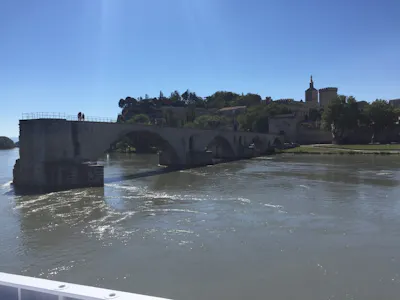
The Rhône is one of the most powerful and purposeful rivers in Europe, born from the Rhône Glacier high in the Swiss Alps at an altitude of nearly 8,000 feet and flowing some 505 miles in a great sweeping arc — first westward through the Swiss canton of Valais, then plunging into Lake Geneva whose blue expanse it crosses before emerging at Geneva with renewed energy, then turning southward through the French Jura and into the broad Rhône Valley where it gathers the waters of the Saône at Lyon and drives with increasing power and momentum through the landscapes of Burgundy, the Rhône Valley wine country, Provence, and the Camargue before fanning into a wide delta and emptying into the Mediterranean Sea near the ancient city of Arles — and along that muscular, sun-brightened journey it passes through a succession of landscapes, wine regions, and historic cities so consistently rewarding and so richly varied that the Rhône corridor constitutes one of the great travel experiences of France, a north-to-south transect through the full spectrum of French civilization from the cool, orderly north to the wild, aromatic, light-saturated south. The Swiss Rhône flows through the dramatic glacial valley of the Valais between walls of Alpine peaks — the Matterhorn and Monte Rosa visible on the southern horizon — past the terraced vineyards of Chasselas and Fendant that produce Switzerland's finest white wines, and through the sun-baked, almost Mediterranean landscape of the lower Valais where apricot orchards and Pinot Noir vines thrive in a climate warmed by the Foehn wind and sheltered by the surrounding mountains in a microclimate of surprising southerly character. Lake Geneva — the Lac Léman — receives the young Rhône and holds it for forty miles in a body of water of extraordinary beauty, its northern shore lined with the Belle Époque resorts and vineyard terraces of the Lavaux — another UNESCO World Heritage landscape — and its southern shore backed by the French Alps in a panorama of mountain and water that has inspired writers from Byron to Rousseau and continues to draw travelers from around the world to its luminous, peaceful shores. Lyon, where the Rhône meets the Saône at the Presqu'île — the elongated peninsula between the two rivers that forms the historic heart of the city — is the undisputed gastronomic capital of France and one of the great underappreciated cities of Europe, its bouchons serving the quenelles, andouillette, and tablier de sapeur that represent the pinnacle of French bourgeois cooking in a city whose relationship with food is so serious, so knowledgeable, and so completely without pretension that eating well here feels less like luxury and more like a civic duty enthusiastically observed by the entire population. Below Lyon the Rhône enters its most celebrated phase as a wine river, flowing through the Northern Rhône appellations of Côte-Rôtie, Condrieu, Hermitage, and Crozes-Hermitage — where Syrah grown on impossibly steep granite terraces above the river produces some of the most profound, complex, and age-worthy red wines in the world — before broadening into the Southern Rhône where the garrigue-covered hills of Châteauneuf-du-Pape, Gigondas, and Vacqueyras produce the powerful, sun-drenched blends of Grenache, Syrah, and Mourvèdre that have made the southern valley one of the most celebrated wine regions on Earth. The Pont du Gard, the magnificent Roman aqueduct that strides across the Gard tributary on three tiers of perfectly proportioned arches to deliver water to the Roman city of Nîmes, stands near the Rhône as perhaps the finest surviving example of Roman engineering genius anywhere in the world, its honey-colored stone reflected in the clear green river below in a scene of such harmonious beauty that it requires no historical knowledge whatsoever to produce a gasp of pure aesthetic pleasure. The river reaches its conclusion in the Camargue, the vast river delta and wetland wilderness where the Rhône fans into the Mediterranean through a landscape of salt flats, shallow lagoons, rice paddies, and wild white horses that represents one of the most distinctive and atmospheric natural environments in all of Europe — a flat, wind-scoured, light-drenched world at the edge of the land where flamingos wade in the pink salt pans, black bulls graze on the marshes, and the river that began its life in the blue ice of an Alpine glacier finally releases itself into the warm, ancient, myth-saturated waters of the Mediterranean in a conclusion of quiet, elemental grandeur entirely worthy of one of Europe's greatest rivers.
Pricing From:
$2,799

Saone River
The Saône is the great gentle river of eastern France, rising in the Vosges Mountains of Lorraine near the village of Vioménil at a modest altitude that gives little hint of the distinguished journey ahead and flowing some 298 miles southward through Franche-Comté and Burgundy before meeting the Rhône at Lyon in one of the most celebrated and symbolically freighted river confluences in France — a union so unequal in temperament that the Lyonnais have always said that their city is built not at the meeting of two rivers but at the meeting of three: the Rhône, the Saône, and the Beaujolais — and along that unhurried southward course the Saône passes through a landscape of such deep, soft, quintessentially French beauty, such consistent gastronomic and viticultural richness, and such perfectly preserved historic character that it represents perhaps the finest expression anywhere in the country of the particular French art of living well in a landscape that has been shaped by centuries of patient, intelligent human attention. The river's upper reaches flow through the gentle hills and dairy pastures of Franche-Comté — a region whose Comté cheese, made from the milk of Montbéliarde cows grazed on flower-rich mountain meadows, is one of the great cheeses of the world — and through the historic town of Gray, whose fine arts museum and handsome riverfront speak to the quiet provincial prosperity that has always characterized this part of France, a prosperity rooted not in grand ambition but in the patient cultivation of excellent things close to home. As the Saône enters Burgundy it begins to move through one of the most revered wine landscapes on Earth, the Côte d'Or — the golden slope — whose narrow ribbon of limestone and clay hillside running southward from Dijon to Santenay produces Pinot Noir and Chardonnay of such transcendent quality, such precise expression of individual terroir, and such extraordinary longevity that the wines of Gevrey-Chambertin, Vosne-Romanée, Meursault, and Puligny-Montrachet are spoken of by wine lovers with a reverence normally reserved for works of art — which in a very real sense they are, each bottle a concentrated expression of a particular slope, a particular soil, and a particular human tradition of cultivation and craft that stretches back to the Cistercian monks who first mapped and classified these vineyards with a methodical devotion that combined the spiritual and the practical in the most Burgundian way imaginable. The river passes through Chalon-sur-Saône, the prosperous commercial town that gave its name to the Chalon fair and that claims Nicéphore Niépce — inventor of photography — among its most celebrated sons, and then through Mâcon, the sunny gateway to Beaujolais whose limestone-built old town and riverside promenade embody the relaxed, wine-warmed character of the southern Saône valley with particular completeness, before entering the Beaujolais country where the granite hills east of the river are planted with Gamay vines producing the bright, cherry-fruited wines — Morgon, Moulin-à-Vent, Fleurie, and a dozen others — that represent some of the most purely pleasurable drinking in all of France and that arrive in Paris and Lyon each November with a fanfare of celebration entirely in keeping with a wine whose greatest virtue is the uncomplicated joy it brings to those who drink it. The Saône is perhaps above all a river for slow travel — for the péniches and hotel barges that drift its length at walking pace, for the cyclists who follow its towpaths through the vine-covered countryside, and for the travelers who stop in every village that catches their eye and find in each one a market, a boulangerie, a church with a Romanesque doorway, and a restaurant serving the local wine with a complete absence of ceremony that is in itself a form of perfection — a river whose unhurried, generous, golden-tinted character feels less like a geographical feature and more like a lesson in how to inhabit the world with grace, pleasure, and a proper sense of what matters most.
Pricing From:
$2,200

Scheldt River
The Scheldt — known as the Schelde in Dutch and Flemish and the Escaut in French — is one of the most historically consequential and culturally rich rivers of northwestern Europe, rising modestly on the chalky plateau of the Aisne department in northern France near the town of Le Catelet and flowing some 270 miles northeastward through France, Belgium, and the Netherlands before emptying into the North Sea through a broad, tidal estuary whose strategic and commercial importance has shaped the political destiny of an entire region for the better part of a millennium. The river begins its journey through the rolling agricultural landscape of French Picardy and Artois — a countryside of wheat fields, red-brick farmhouses, and market towns whose sturdy Flemish character announces itself well before the Belgian border — passing through the textile city of Cambrai, whose fine linen gave the English language the word cambric, and the ancient fortified city of Valenciennes, whose Flemish baroque architecture and tradition of fine arts production speak to the long cultural continuum that the river connects across what are today three separate nations but were for centuries a single, richly interconnected civilization of cloth merchants, painters, and city builders. Crossing into Belgium the Scheldt enters its most historically and artistically significant phase, flowing through the Flemish heartland whose cities — Tournai, Ghent, and ultimately Antwerp — represent some of the highest achievements of Northern European urban civilization and constitute a procession of artistic and architectural treasure so concentrated and so consistently magnificent that traveling the Scheldt valley through Belgium feels less like a river journey and more like a grand tour of Western art history conducted at the most pleasurable possible pace. Tournai, the oldest city in Belgium, sits on the river with a gravity and dignity befitting its antiquity — its five-towered Romanesque cathedral, the finest in the country, rises above the Scheldt in a profile of such noble solemnity that it seems to anchor the entire surrounding landscape to a deeper stratum of time, and the city's long tradition of tapestry weaving, painting, and stone carving produced artists and craftsmen whose influence spread across the whole of northern Europe in the medieval and Renaissance periods. Ghent — where the Scheldt meets the Leie in the heart of one of the most beautiful medieval cities in Europe — is the river's great Flemish masterpiece, its skyline of guild halls, belfry, and cathedral towers rising above the water in a composition of such theatrical perfection that it has been drawing painters, poets, and travelers to its banks for centuries, and the Cathedral of Saint Bavo houses the Ghent Altarpiece — Jan van Eyck's magnificent polyptych completed in 1432 and considered by many art historians to be the most important painting in Western art — in a setting so perfectly suited to its scale and ambition that the experience of standing before it feels like one of the defining encounters available to any traveler in Europe. The Scheldt then flows northward to Antwerp, where it broadens into the wide tidal reach that made this city one of the wealthiest and most cosmopolitan places on Earth during the sixteenth century — the commercial and financial capital of the known world at the height of its powers, a city where merchants from every corner of the globe traded spices, diamonds, cloth, and ideas in a atmosphere of such extraordinary energy, tolerance, and cultural ambition that it produced Peter Paul Rubens, the greatest painter of the Baroque age, whose magnificent works still fill the city's churches, museums, and auction houses with a voluptuous, life-affirming splendor entirely in keeping with the character of a city that has always understood commerce and culture as two expressions of the same fundamental human appetite for the best of everything. The river's final Dutch passage carries it through the flat, windswept landscape of Zeeland — a province whose very name means Sea Land and whose history of reclamation, flood management, and maritime enterprise represents the Dutch relationship with water at its most heroic and most characteristic — before the Scheldt estuary opens into the grey-green North Sea in a wide, luminous conclusion that has welcomed and dispatched the ships of every maritime nation in European history, the river completing its journey from the modest chalk uplands of northern France to the open ocean in a passage that encompasses more history, more art, and more human achievement per mile than almost any other waterway on the continent.
Pricing From:
$3,739

Seine River
The Seine is Paris's river and France's most celebrated waterway, rising from a modest spring in a small wooded valley in the Burgundy region of Côte-d'Or — where the Burgundian authorities have erected a charming grotto and a reclining statue of the river goddess Sequana to mark the source — and flowing some 483 miles northwestward through the landscapes of Champagne, the Île-de-France, and Normandy before emptying into the English Channel at Le Havre in a broad, industrial estuary whose commercial importance to France has been as fundamental and as continuous as the cultural importance of the river's more celebrated upper reaches. The Seine is inseparable from Paris in a way that no other river is inseparable from its city — not the Thames from London, not the Tiber from Rome, not the Hudson from New York — for Paris did not merely grow up beside the Seine but grew outward from it, the city's earliest settlement on the Île de la Cité in the middle of the river expanding over two millennia into the metropolis that now spreads across both banks for miles in every direction while still orienting itself instinctively toward the water, its great monuments — Notre-Dame, the Louvre, the Musée d'Orsay, the Eiffel Tower, the Pont Alexandre III — arranged along the riverbanks as if by a city planner of godlike aesthetic ambition who understood that a river is not merely a boundary or a resource but the organizing principle of urban beauty itself. The river within Paris is one of the great urban experiences of the world — the sequence of views from its thirty-seven bridges, each one a work of architecture in its own right, the bouquinistes with their green metal boxes of secondhand books and prints open along the Left Bank quays, the bateaux-mouches and vedettes gliding beneath the stone arches in a continuous gentle traffic that has characterized the river since the Middle Ages, and the quality of light that falls on the water in the late afternoon — a particular silvery, diffused luminosity that the Impressionists were the first to fully understand and capture but that every visitor to Paris eventually notices and tries, usually unsuccessfully, to photograph — all combine to create a riverside experience of such concentrated beauty and such deeply layered cultural meaning that simply walking along the Seine on a fine Parisian evening constitutes one of the most complete aesthetic experiences available to any traveler anywhere in the world. The river above Paris flows through a landscape of exceptional Impressionist associations — the valley between Paris and Rouen was the most painted stretch of water in the history of Western art during the late nineteenth century, as Monet, Sisley, Renoir, and Pissarro set up their easels at Argenteuil, Chatou, Vétheuil, and a dozen other riverside villages to capture the play of light on the water, the regattas, the riverside guinguettes, and the poplar-lined banks in canvases that permanently changed how the world understood the relationship between light, water, and the act of seeing. The great loop of the Seine between Paris and the sea passes through a succession of landscapes and towns of increasing Norman character — the forest of Vernon, the magnificent gardens of Monet's house at Giverny where the water lily ponds and Japanese bridge inspired some of the most beloved paintings in the world, the ancient city of Rouen whose Gothic cathedral Monet painted in more than thirty canvases at different times of day and seasons of light, its stone facade dissolving in the changing atmosphere into something more like music than architecture, and the dramatic chalk cliffs of the Seine estuary near Étretat whose needle-like arches rising from the sea inspired Impressionist painters and Fauve colorists alike before the river finally surrenders to the Channel in the great industrial port of Le Havre — a city rebuilt after the Second World War by the architect Auguste Perret in a modernist vision of concrete and light that was itself designated a UNESCO World Heritage Site, a reminder that the Seine's talent for inspiring architectural and artistic ambition does not diminish even at the very last mile of its journey to the sea.
Pricing From:
$2,799